5 Online Safety Rules
- The 5 safety rules at a glance. Disconnect completely. Meaning that the electrical installation must be disconnected from live parts on all poles. Related products. Secure against re-connection. Reliably prevent the accidental re-connection of an.
- 5 Internet Safety Tips for Tweens & Teens Living in a digital world, it's crucial to keep your connected child safe online — from social media to privacy settings to inappropriate content and more. By Scholastic Parents Staff. Share this article Send.
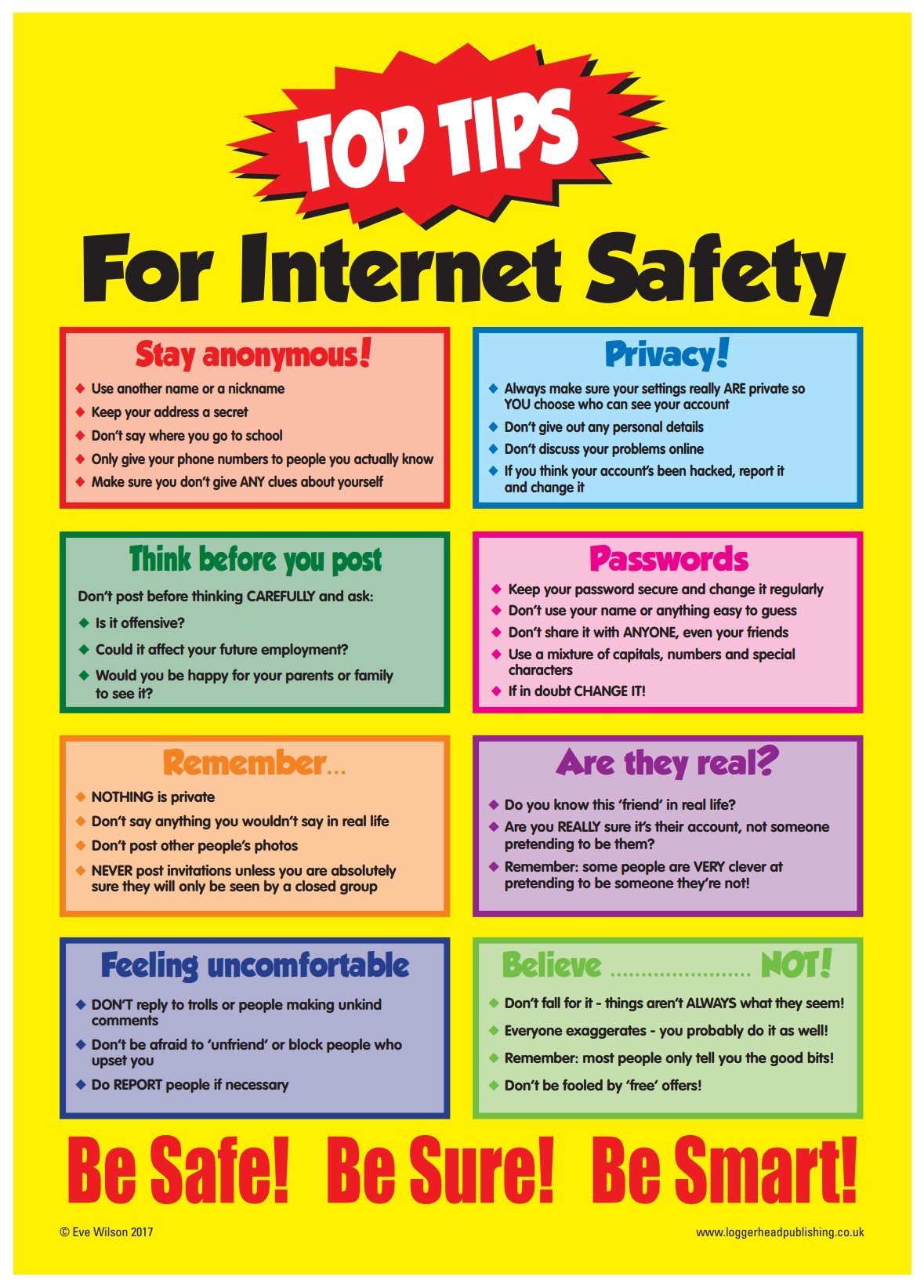
Kat and Sloane’s Top 10 Online Rules for Internet Safety:
TEACH CHILDREN THE OBVIOUS IDENTITY RULES Tell your children NOT to put photos of themselves on the Internet or to give out their names, addresses, phone numbers, schools, or other personal information online. INSTALL AN INTERNET FILTER OR FAMILY SAFETY. I will always use good 'netiquette' and not be rude or mean online. Note: All Cyber Chips will expire annually. Each Scout will need to “recharge” the chip by going back to the NetSmartz Recharge area. This space will hold new information, news, and a place for the Scout to recommit to net safety and netiquette. Then, with the unit.
1. Passwords Remember to always keep your online account id and password private, except from your parent or guardian. Don’t share it with friends – even your best friend. Change your password if you think someone else knows it.
2. Personal Information Never give out personal information online – like your phone number; parent’s work number; address; social insurance/social security number; name or location of your school or your password. If you think it is necessary to give some information - check with your parents first.
3. Be careful what you post. -Think about what you write in chat rooms, emails and instant messages. Nothing online is completely private. If you send personal information, provocative photos or intimate details to your friends, remember that even friends can use this against you or cause problems later on. What if your current friend becomes an ex-friend down the road?
4. Online Only -Never agree to meet an ‘online’ friend in person. This person might not be who you think they are and wish you harm. Even if they say they are a kid, seem nice or friendly, there are bad adults that pose as kids. Knowing that, if you feel there is absolutely someone you must meet and your parents agree, make sure they go with you and make the meeting in a public place.
5. Photos Don’t share photos of yourself with anyone you don’t know. Don’t share provocative photos of yourself or friends – once they are ‘out there’ you cannot control who sees them. If someone makes you uncomfortable by asking for photos or asking you what you look like or personal questions, tell your parents, the police or contact CyberTipline.com.
6. Bullying Tell your parents if you feel uncomfortable or bullied by anyone on-line. Remember – you don’t have to respond to any messages that are mean or make you feel uncomfortable. Report anything you think is inappropriate or disturbing. Don’t do anything yourself that hurts others or is against the law.
7. Protect your computer Check with your parents before downloading or installing software. Do not open attachments from emails you don’t recognize – even if they are addressed to you personally. You could let in a virus, damage the computer or put your family’s privacy at risk.
8. Using a Cell Phone Cell phones can be great for safety since they let you keep in touch with your parents or call 911 if there is an emergency. However, you should follow all the same safety tips with your cell phone as you do with your computer. Be careful who you give your number to. Be aware that GPS and other technologies can pinpoint your physical location, and don’t give out personal information or your location to anyone you don’t know well.
9. Surfing Visit areas on the web that are appropriate when you are surfing online. Visiting inappropriate areas can put you at risk and lead to trouble. Use your computer responsibly and know that your usage can be tracked.
10. Exit Remember – you can log off at any time! Decide how long you should spend on your computer each day and log off when the time is up. There is a whole world out there and you can’t be fit and healthy if you sit in front of your computer all day. Go have fun with your friends in person!
Avoiding the dark corners of the Internet
5 Internet Safety Rules
The Internet is a melting pot of information, social interaction, entertainment, and countless other resources that we rely on daily. It is literally limitless and constantly growing for both the better and worse. Are you following a few basic guidelines to make sure you don’t stumble into the dark side of the online world where the scammers, hackers, and infiltrators are waiting to take advantage of you? If not, here are 5 online safety rules to follow for good measure.
Important Rule #1
Always have anti-virus software that regularly scans your computer to detect and prevent viruses. This can also minimize damage if a virus actually invades your computer.
5 Weapon Safety Rules
Important Rule#2
Don’t fall for scams. This includes but is not limited to: popups, ads that sound too good to be true, strangers offering awards or free gifts, job offers making a fortune working from home, congratulations you’re the millionth customer pitch, random surveys, forms that require credit cards, and many other vague advertisements.
Safety Rules In Electrical
Important Rule#3
Research a company before you give them any personal information. If you plan to buy something from their website, try and learn as much as you can about them before you make the purchase. If you have a gut feeling that this seems a little off kilter, then don’t do it!
5 Rules Of Online Safety
Important Rule#4
Don’t download files from untrusted websites. If you see an offer for a free. software download, it has the potential to infect your computer.
Important Rule #5
Stay away from suspicious websites at all. Suspicious characteristics include but are not limited to: abundant popups, shady side ads, and uncertain links. Stray away from these because one wrong click could send problems straight to your computer.